From grief to a living model that shares music value with the places it came from
At Sheret Energy Offshore (SEO), Corporate Social Responsibility isn’t a branding exercise, it’s how the company chooses to work. SEO’s founders believe values only matter when they’re lived, which is why they support the Finn Moray Social Compact with the same seriousness they bring to any of the group’s business streams. This isn’t box-ticking or a PR gesture; it’s a real, long-term commitment to returning value to Scottish communities, built from personal loss, purpose and a refusal to settle for empty promises.
Below, David Sheret, CEO of SEO, explains how the project came to life and why it matters to him.
The last time I read The Tree on the Sun in public before it became a song, I was standing at the front of friends and family at Clydebank Crematorium, looking at my dad’s coffin.
It was 2 May 2025. The air in the room felt pretty small and very full at the same time. The poem was something I had written about ten years earlier. I never meant it for that moment, but life made the choice for me. It was one of my father’s favourites and the final words of my eulogy. When I finished reading, I sat down and thought: this can’t be where it ends.
In the space of a few weeks I had lost my dad, my friend Paul and our dog Jax. You don’t walk through that much absence and stay who you were, at least I didn’t. Grief strips the noise away. It can leave awkward, simple questions. Who are you, really? What do you want your work to do? If your life is shorter than you hoped, are you spending it well?
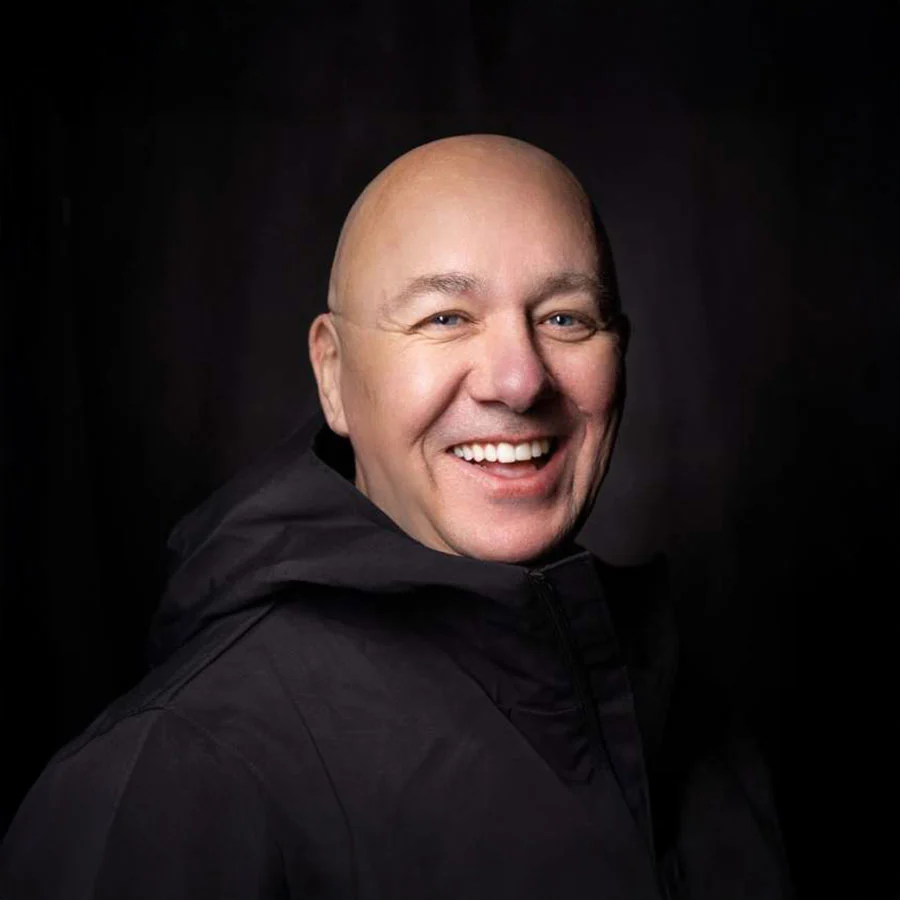
In real life, my name is David Sheret. Since 2006 I have worked in offshore energy and consultancy in Aberdeen. I like creating opportunities, building solutions and helping more than is probably healthy. I run a company called SEO with my business partner Graeme Wood. We deliver consultancy projects and are building a communications AI service that helps people say what they mean with more clarity and less nonsense. It is good work, but it is not the whole story.
The other part of me writes poems, lyrics, and songs, and sits with a trusted Freshman acoustic guitar until the shape of a feeling turns into chords. I call that part of me Finn Moray.
Finn is not a character. He is the name I give to the creative side of my life so I can look at it straight. Under that name I have made a simple, serious promise. I am turning my writing, songs and the work around them into a long-term giving project. Under the Finn Moray Social Compact, fifty percent of all net profit from Finn’s music and related work goes back to communities in Scotland. Not a token cut of a single, not a small charity tie-in on a T-shirt, but half of everything after costs. The other half keeps the project alive and fair to the people who help me make it.
AON is the first expression of that decision. It is an album and a wider body of work built as a living musical map, fifteen songs in two parts tied to real places and real people. Part one is called The Call, my versions of the songs I heard in my head. Part two is called The Gathering, the echo that comes back when other people answer in their own voices. You can read more about this on the website, but if you are talented and like one of the songs on The Call, you could be chosen to sing it on The Gathering, so get in touch.
On the core catalogue, including The Call, the net profit split is simple. Fifty percent goes to good causes, fifty per cent is retained to keep Finn Moray and collaborators sustainable. When a track is reinterpreted under The Gathering, Finn’s share drops. Net profit is shared fifty per cent to the region, twenty-five per cent to the covering artists and twenty-five per cent to Finn.
Streaming now makes up around two thirds of global recorded music revenue and more than 750 million people pay for music subscriptions, yet Spotify still pays artists roughly three dollars per thousand streams on average, while Apple Music and Amazon rarely clear nine dollars per thousand streams. Only a tiny fraction of artists share meaningfully in those billions.
The industry line is that this is just how things are now. We want songs everywhere, instantly, on every phone, with no friction.
I do not believe that.
We are not prisoners, we are creatures of convenience. The awkward truth is that we could stream music differently tomorrow. We already have the tools to host albums on artist-owned sites, co-operative platforms and regional services that pay properly. We could stream directly from artists without the big platforms in the middle and bookmark those instead of reflexively opening an app whose business model treats most musicians as background noise. We just choose not to. That choice costs artists a fair deal, and that is wrong.
If streaming is now the default way people listen, then let us treat it like infrastructure and design it to return value to place. Under the Social Compact, every song on AON is tied to a real Scottish town or village, or a person from that town, and half the net profit flows back to that region. When The Gathering opens up, I want undiscovered artists in those places not only to reinterpret the songs but, if they wish, to release their own work on their own streaming rails too, whether that is a co-owned platform, a white-label service or a simple site with a decent player.
At that point the power flips. We can help with structures and introductions to digital distribution. They bring the talent and the graft. After that it is up to them to use online marketing, community building and old-school word of mouth to grow. Why should they not. Why should an artist in Ayr or Lerwick feel they have to feed the same global machine as everyone else when they could keep the bulk of their cash and their integrity in their own streets.
It is much better, in my view, to sell out a small hall and keep your soul intact than to chase a stadium while being fleeced by a corporation. One hundred people in a room who really listen and know that part of their ticket is keeping a youth club open or a mental health peer support group alive can be worth more, artistically and economically, than a playlist spike that goes, for the most part, back to the corporation.
None of this means turning our back on technology. Although I wrote and arranged the songs, I have proudly used AI tools in the making of AON: The Call to create stems, clean messy audio, test rhythm ideas, find and shape the voices best suited to the songs and sketch arrangements that would otherwise take months. The final sound has been crafted with the help of Argentinian Latin Grammy-winning producer and mixing engineer Mariano Beyoglonian, working with me through calls and file transfers between Aberdeen and Buenos Aires. The tech is clever. The heart stays human.
Although AON is rooted in Scottish streets, people and places, the idea behind it is not a narrow national gesture. It starts here because this is my home, but the deeper ambition is quiet and wide. I would like this to become a thought that travels, a structure other people can look at and say, in their own language and context, why not. We can do something like this here.
Grief began this project, but it is not a sad monument. I do not want a marble statue by the roadside. I want a living practice of responsibility, a way of keeping faith with what my dad taught me. Work hard. Be present. Love good people. Give away what you can. Keep going clear, as my dad used to say.
If the music travels and the value returns, if one good cause stays open a bit longer, if one person feels seen because a song quietly carried their town back to them, then this whole Finn Moray experiment will have been worth it.
To buy AON: The Call or find out more about the
Finn Moray Social Compact go to www.finnmoray.com
or email: finn@finnmoray.com