


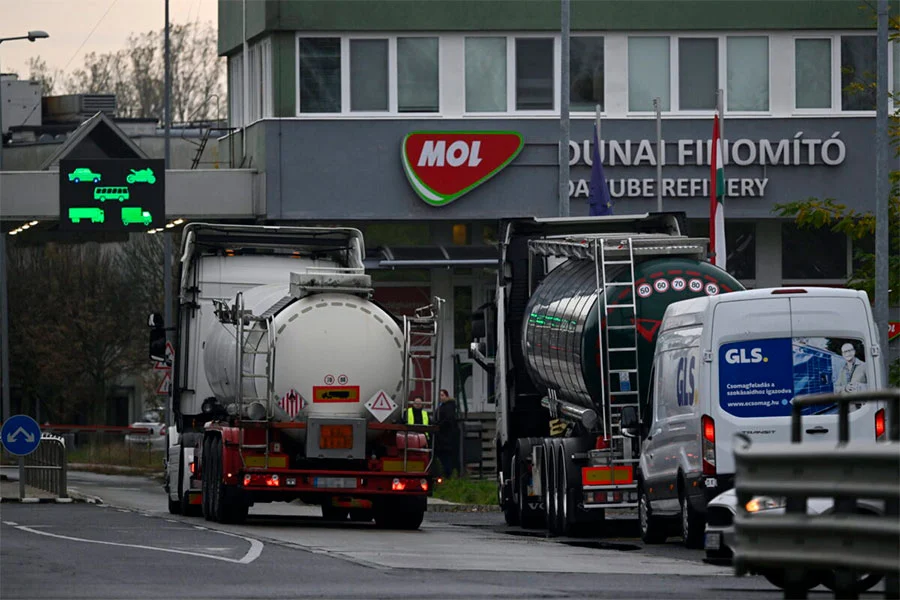
A historic turning point is looming in Serbian energy policy. After months of speculation, there are growing signs that Hungarian oil and gas company MOL is about to take over Naftna Industrija Srbije (NIS). The aim of the deal is to rescue the company, which has been crippled by U.S. sanctions against its Russian majority owners, and to guarantee regional security of supply.
According to a report by the Serbian news agency Tanjug, representatives of MOL have already begun a comprehensive due diligence review (DDR) in Serbia.
Experts from the Hungarian company have arrived on site to conduct an in-depth analysis of the financial and operational structure of NIS, Serbia’s only oil company.
NIS is currently in a precarious situation. As the company is majority-owned by Russian giants Gazprom and Gazprom Neft, it is directly affected by U.S. sanctions. In November 2025, this led to the suspension of crude oil deliveries via the Croatian JANAF pipeline and the virtual shutdown of the refinery in Pančevo (Pancsova).
After a meeting of the National Security Council, the Serbian President described the current situation as unacceptable, Világgazdaság reports. “We must finally put the sanctions system behind us,” said Aleksandar Vučić. He called on all parties involved – Gazprom, the NIS management, and Hungary’s MOL – to finalize the purchase agreement as quickly as possible.
The negotiations are under enormous time pressure. The U.S. Office of Foreign Assets Control (OFAC) has granted a special license allowing NIS to resume operations until January 23, 2026.

The key points of the sale must be finalized by this date in order to achieve a permanent suspension of sanctions.
President Vučić announced an ambitious roadmap:
- January 15: Expected arrival of the first 85,000 tons of crude oil.
- January 17 or 18: Restart of the refinery in Pančevo.
- January 25 or 26: Start of production of petroleum derivatives for the domestic market.
Serbia has long been a key market for MOL Group. In an earlier statement, the group emphasized its excellent cooperation with its Serbian partners and its goal of jointly strengthening security of supply in the region.
If the deal goes through, MOL would officially become the owner of NIS, thereby massively expanding its position as a leading energy player in Central and Southeastern Europe.
In addition to the refinery, MOL would also take over a network of over 300 gas stations and important industrial facilities such as Petrohemija.
The withdrawal of Russian capital from the Serbian oil industry marks the end of an era. While Serbia has tried for years to maintain a balance between Moscow and the West, pressure from U.S. sanctions is now forcing Belgrade to orient itself toward the West in the energy sector – with Hungary as a strategic bridgehead.
It remains to be seen whether the deal will be finalized by the January 23 deadline, but the presence of Hungarian experts in Subotica and Pančevo underscores that negotiations have entered a decisive phase.
“From our platform to LinkedIn’s energy professionals – your announcements reach the entire sector’s network, not just our readers.”